











When businesses are first created, every responsibility falls on the business owner. As they juggle increasing sales, customer service, marketing, and even bookkeeping and accounting, two questions come to mind – how do I pay myself? How do I pay my business’s taxes?
Self-payment for small business owners is far from simple. There are certain requirements for the amount you pay yourself, and even how you receive payments. That is why the xendoo team has created this guide to help you navigate self-payment and taxes as a C-corporation owner!
How to Pay Yourself as a C-corporation: Salary or Dividends
The payment you receive depends on your role within the company. C-corporations are made up of the following roles:
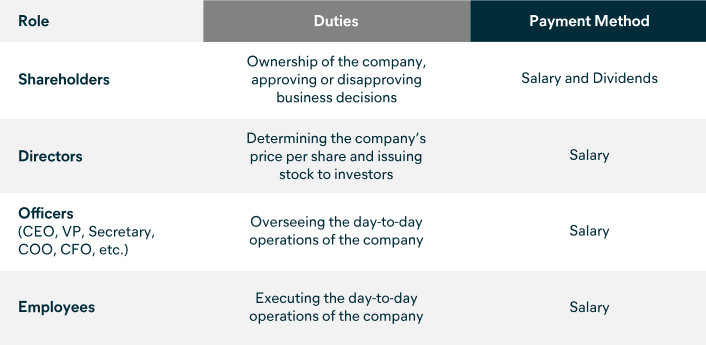
Directors, officers, and employees in a C-corporation take a salary, which is subject to payroll taxes. Shareholders can take a salary and dividends, which are allocations of stock from retained earnings, if the company chooses to distribute profits. Some shareholders opt not to take dividends, which will be discussed shortly.
In smaller C-corporations, one person can act as the shareholder, director, officer, and employee. Shareholders can also be involved in the day-to-day operations of the company, and are referred to as shareholder-employees.
How Do I Pay My Taxes as a C-corporation?
C-corporations are considered separate legal entities from their owners. This means that the business is taxed at the corporate level, with dividends being taxed again at the shareholder level, resulting in double taxation. Smaller companies may choose to avoid dividend payments for this reason.
C-corporations file their taxes using Form 1120, which reports the business’s income, losses, credits, and deductions. If shareholders take dividends, they use Form 1099-DIV to report the amount that was distributed to them.
To ensure that your C-corporation taxes are filed correctly and on time, you can partner with an online CPA. They will help you to maximize your tax savings and enjoy peace of mind during the most stressful time of the year.
Are Salaries and Dividends Tax-Deductible?
Dividends are not tax-deductible expenses, but shareholder-employee salaries are – as long as they are reasonable. Some business owners may take high salaries in order to reduce the company’s taxable income. However, if the salary is too excessive, it could be reclassified as a dividend payment, taxed at the shareholder level. The company would then lose that excess salary as a deduction. On the other hand, if the salary is too low, it can be considered an attempt to avoid employment tax liability, which could draw scrutiny from the IRS.
Every business is different, so the salaries that business owners take will vary. To get started, you can take a look at the factors the IRS uses to determine a reasonable salary for shareholder-employees in C-corporations:
- What comparable businesses pay for similar services. If an employee’s salary falls in line with what similar businesses pay for that position, the salary will be considered reasonable.
- Character and condition of the corporation. If the company is performing exceptionally well, an above-average salary can be considered reasonable.
- The role of the employee within the business. The IRS considers the hours the employee works, the duties they perform, and the contributions they make to the success of the business. If the employee receives a raise, they must also receive an increase in responsibility for their salary to be considered reasonable.
- Internal consistencies in establishing compensation levels. Inconsistencies in the compensation of other employees can suggest that the employee’s salary is unreasonable.
- Conflicts of interest in setting compensation levels. Conflicts of interest occur when there is a clash between personal interests and professional obligations. For example, if a shareholder attempted to disguise dividends as a deductible salary, the IRS would deem the salary unreasonable.
You do not have to figure your salary out on your own. Discuss your options with an online C-corporation accountant at xendoo today!
xendoo is Here for You
Every business owner deserves an accounting team that is dedicated to their financial success. xendoo provides online bookkeeping and accounting services to C-corporation owners, so they can make the most informed decisions for their business!
We would love to get to know your business. Click here to schedule your free consultation.
Want to learn more about the different business entity types? Click here.