













Section 199A reduces taxable income for many business owners. It rewards how your business is structured, how your income is reported, and how your numbers are maintained.
This deduction is not automatic. It depends on your income, your entity type, and the accuracy of your financial statements.
Here is how it works.
What is Section 199A?
Section 199A is also called the Qualified Business Income (QBI) deduction.
It allows eligible business owners to deduct up to 20% of qualified business income from their taxable income.
If your business generates $200,000 in qualified net income, the deduction can reduce your taxable income by up to $40,000.
That is a direct reduction before tax is calculated.
Who Qualifies
Section 199A applies to pass-through entities:
- Sole proprietorships
- Partnerships
- S corporations
- Some LLCs
C corporations do not qualify.
The income must come from a U.S. trade or business.
What Counts as Qualified Business Income
Qualified Business Income includes:
- Net income from your business
- Ordinary business profits
It does not include:
- W-2 wages paid to yourself
- Capital gains or losses
- Interest income unrelated to the business
Accuracy matters here.
If your books are not clean, your QBI calculation will not be reliable.
Income Thresholds That Change the Deduction
Your total taxable income determines how much of the deduction you can take.
For higher-income business owners, limits apply based on:
- W-2 wages paid by the business
- Qualified property owned by the business
There is another layer for certain industries.
Specified Service Businesses (SSTBs)
Some businesses face additional limits at higher income levels.
These include:
- Law
- Accounting
- Consulting
- Financial services
- Health
If your income exceeds certain thresholds, the deduction begins to phase out.
Above the limit, the deduction may be eliminated entirely.
Why Your Financial Statements Matter
Section 199A depends on precision.
Your deduction is based on:
- Net income
- Payroll totals
- Expense categorization
- Entity structure
If expenses are missing, income is overstated.
If income is overstated, your tax bill increases.
If payroll is not tracked correctly, wage-based limitations can reduce your deduction.
Monthly reporting creates control.
When you review your Profit and Loss and payroll data each month, you can:
- Track qualified income in real time
- Adjust compensation strategies
- Plan for thresholds before year-end
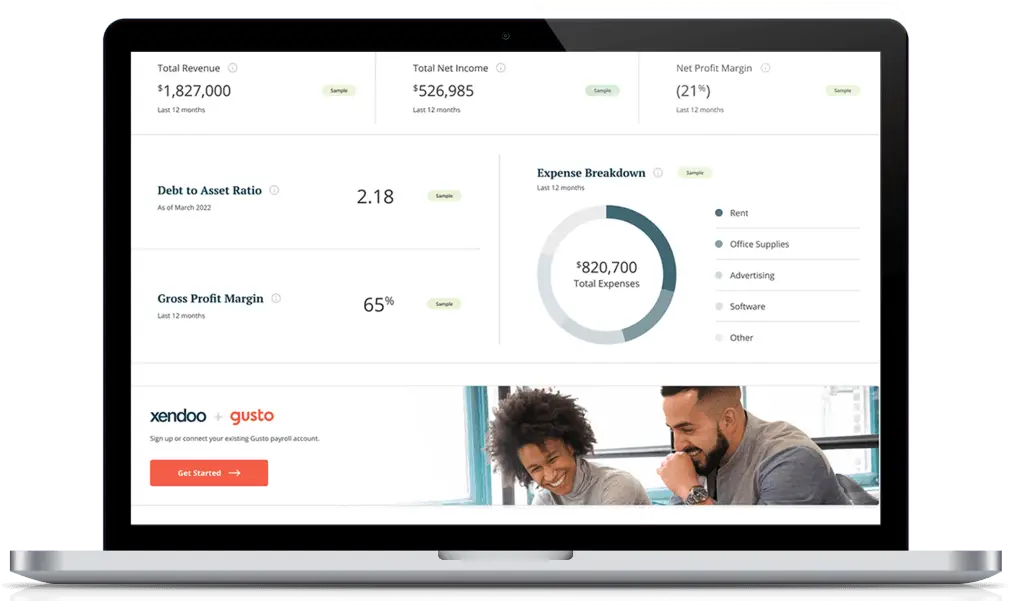
This level of consistency requires more than basic bookkeeping. Xendoo delivers weekly reconciliations and monthly financial reporting, giving you current, accurate numbers to track QBI throughout the year.
How to Maximize the Deduction
This is where strategy comes in.
1. Review Entity Structure
S corporations often create planning opportunities.
Owner compensation impacts QBI.
The balance between salary and profit affects the deduction.
2. Manage Taxable Income
Income thresholds control eligibility.
Strategies include:
- Retirement contributions
- Timing of income and expenses
- Prepaying certain costs
Each decision changes your taxable income position.
3. Track W-2 Wages
For higher-income businesses, wages paid can increase the allowable deduction.
If payroll is not structured properly, the deduction can shrink.
4. Maintain Accurate Books
Every number in the calculation comes from your financials.
Delayed or incomplete bookkeeping limits your ability to plan.
Clean books create visibility.
Visibility creates opportunity.
Common Misses
Business owners leave money on the table when:
- Income is not categorized correctly
- Payroll is not aligned with tax strategy
- Financials are reviewed only at tax time
- Entity structure is not revisited as the business grows
These are not small gaps.
They directly impact how much of the 20% deduction you keep.
What to Do Next
Start with your numbers.
- Review your latest Profit and Loss
- Confirm your payroll totals
- Look at your taxable income position
Then move into planning.
Section 199A is not a once-a-year decision. It is managed throughout the year.
Final Takeaway
Section 199A reduces taxable income in a meaningful way.
The full benefit depends on how your business is structured and how your financials are maintained.
When your numbers are accurate and reviewed consistently, you gain control over the outcome.
Disclaimer: Section 199A rules include income thresholds, phase-outs, and industry-specific limitations that change over time. Work with a CPA or tax professional to apply these rules to your specific situation and ensure compliance.