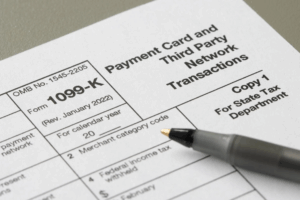











If you’re like most small business owners, you started out as a sole proprietor. And if you came from being employed by someone else, you were totally shocked the first time you saw on your income tax return what you owe in self-employment tax.
“What is that huge amount?” you asked. You were answered, it’s the Social Security and Medicare taxes that used to be taken out of your paycheck by your employer.
“But I never paid that much before.” That’s because your employer paid 50% of it. Now you’re paying all 100%, because you are both the employer and the employee. Welcome to the wonderful world of the self-employed!
Now for the most important question of all: “How can I get it reduced?” There are several strategies you can use. We’ll talk about them here, starting with the one that can save you thousands of dollars.
Register Your Business as an S Corporation
When you are the owner of an S Corporation, you are classed as an employee of the company, meaning that you personally pay 50% of the employment tax and the company pays the other 50%. (Of course, your company must pay you a regular salary in order to take advantage of this.)
As the owner of the corporation, you’ll still have to pay the entire employment tax on your salary: half through payroll deductions and half through personal income tax. However, you don’t have to pay it on distributions or dividends (earnings and profits) that you transfer from the company to your personal account. That’s why many S corporation owners choose to take the majority of their salary in the form of dividends and put the least amount possible on their paycheck.
In case you’re wondering, you can’t avoid the tax completely by not paying yourself any salary at all. The IRS requires you to pay yourself “reasonable compensation” — basically what you would have to pay someone else to do your job. However, as we’ve seen, there are better ways to take your salary than a simple paycheck.
Registering as an S corporation is simple: just file Form 2553 with the IRS by March 15. There are some qualifications you have to meet; read about them here.
Take More Deductions
Self-employment tax is calculated as a percentage of your income after deductions. So the more deductions you can find, the lower your taxable income — and hence the self-employment tax — will be. Here are some places to look:
- Business travel (including driving to client’s homes or businesses)
- Product supplies
- Office supplies and equipment
- Internet and phone services
- Interest paid on business loans and credit cards
- Business-related education costs
- Marketing expenses
- Service professionals such as accountants, lawyers and website developers
- Home office: a percentage of home repairs, maintenance and improvements
The Tax Cuts & Jobs Act
There’s nothing you have to do for this one, except enjoy the tax break! Beginning with your 2018 tax return (filed in 2019), there’s a new deduction for pass-through business entities such as sole proprietorships, partnerships, LLCs and S corporations. (Pass-through means the business income is reported on your personal income tax.)
Until now, that pass-through income was taxed at standard rates; there were no special treatments as there are for big C corporations. Under the new law, you’ll get a deduction of 20% of qualified business income (QBI).
QBI is defined as income, gain, deduction and loss that are effectively connected with your business. It does not include certain investments, reasonable compensation paid to the owner, or guaranteed payments to a partner or LLC member.
Want to learn more about becoming an S corporation, increasing tax deductions or other ways to reduce your self-employment tax? Please consult your xendoo tax advisor to find the right solution for your business.
[av_sidebar widget_area=’Blog Post Disclaimer’ av_uid=’av-om2w’]