











Tax season can be difficult for business owners, and it’s tough when you don’t know what tax forms to fill out or how. If you have a domestic corporation, then you’ll need to use the IRS Tax Form 1120. Corporations and LLCs that are taxed as corporations must use this form to report their income, tax deductions, and credits.
You can use this guide to better understand the purpose of Form 1120 and what information you’ll need to fill it out correctly.
What is Form 1120?
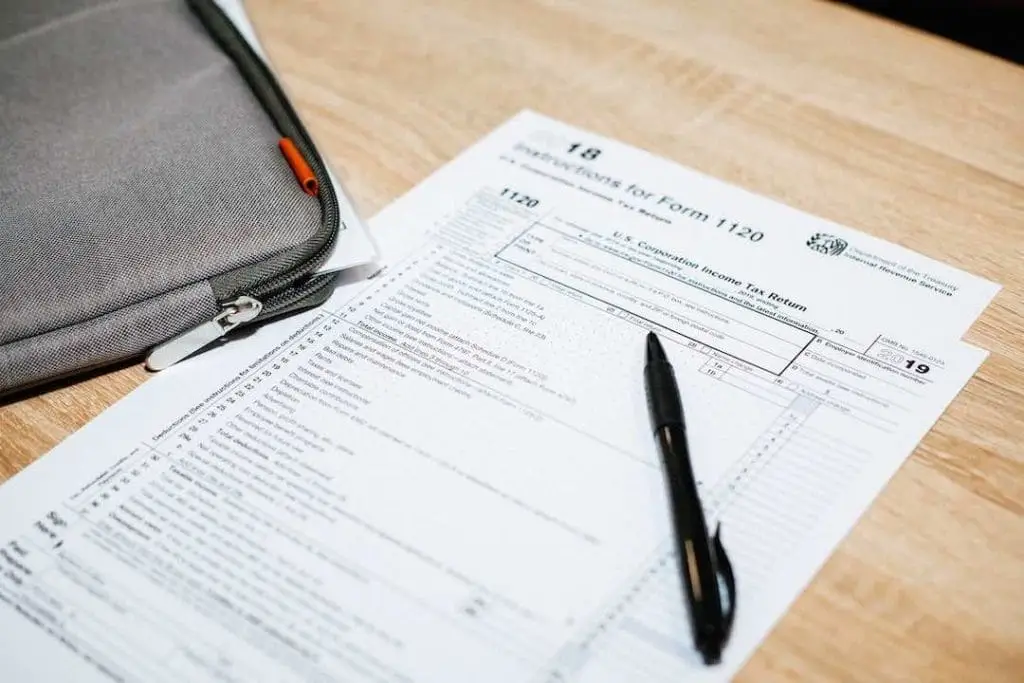
Form 1120, also known as the U.S. Corporation Income Tax Return, is an IRS form that certain businesses use to file taxes. It helps businesses report their yearly profits and losses to determine their tax liability. Businesses can also use Form 1120 to report the gains or losses from the sale of assets and any taxes due from foreign income.
In addition to Form 1120, the IRS requires businesses to make quarterly estimated tax payments if they expect to owe more than $500 on their tax returns. To remain tax compliant, companies must understand the filing requirements and deadlines.
Who Files Form 1120?
C corporations (C corps) or limited liability companies (LLCs) that choose to be taxed as a corporation file Form 1120. Other businesses, such as sole proprietorships and partnerships, do not file Form 1120. S Corporations must file the IRS’ Form 1120-S instead of the standard 1120.
LLCs have a bit more flexibility regarding taxes. They have three tax options—corporation, partnership, or disregarded entity. By default, the IRS taxes LLCs as a partnership when there are two or more owners (multi-member LLC).
If there is only one owner (single-member LLC), then for tax purposes, the IRS doesn’t separate the business from the owner. The owner of the single-member LLC files Form 1040. They must attach Schedule C (Form 1040) to report business Profit and Loss, along with any other required Schedules or forms.
However, a company can choose to be taxed as a corporation instead. If this is the case for your business, then you’ll need to file Form 8832, Entity Classification Election, first. Then, you can use Form 1120.
What You Need to File Form 1120
Now that you understand who must file Form 1120, let’s review what paperwork and records you’ll need for filing. Here is a brief list of what you will need to know:
- Business name and Employer Identification Number (EIN)
- Date you incorporated your business
- Gross receipts or sales
- Cost of Goods Sold (COGS)
- Gross profit
- Dividends earned
- Interest earned
- Royalties earned
- Net capital gain income
- Tax deductions (These vary by company. View our list of tax deductions for businesses.)
- Business tax credits you plan to apply for
- You should also attach any other required forms or schedules to the form, such as Schedule K-1 for shareholders or Schedule M-1 for reconciling net income with financial statements
You can find most of the information on your financial statements, such as your balance sheet, income statement, and other related documents.
To complete Form 1120 accurately, you can hire a bookkeeper to record your income, expenses, and other financial records for the tax year. They’ll track your receipts, invoices, bank statements, and other business transactions. Once you file taxes, you’ll have all the information you need on hand to fill out the relevant forms.
How to File Form 1120
There are two ways to file Form 1120: online or by mail. Online or e-filing is the fastest and most accurate way to submit your tax return. You’ll need a copy of Form 1120 that you completed and any required attachments like Schedules and forms. Alternatively, you can mail a copy of Form 1120 with any required payment and attachments to the IRS.
Filing corporate taxes may be confusing, especially for larger businesses that need to consider depreciation, business expenses, and tax credits. Business tax services with CPAs can file all the tax forms for you, on-time and error-free.
Form 1120 Page 1
Page 1 of Form 1120 reports your income, gains, losses, deductions, and credits to the Internal Revenue Service (IRS). Information on this page includes:
- Business name, contact information, and address – You will need to provide the full name and address of the corporation, as well as the name and title of an officer or responsible party.
- Employer Identification Number (EIN) – This is a unique nine-digit number assigned by the IRS to identify your business for tax purposes.
- (Line 11) Total gross income for the tax year – This includes income from sales, services, investments, and other sources.
- (Line 27) Total deductions – Any expenses your business can deduct from its total gross income on Form 1120.
- (Line 30) Total taxable income – You can calculate this by subtracting your deductions from your total gross income.
- Tax payments made during the tax year – This includes any estimated taxes paid, any balances due from prior years, and other special payments.
Schedule C
Schedule C of Form 1120 reports any dividends or special deductions the corporation has taken.
On Schedule C, you will need to report dividends the corporation paid to shareholders during the tax year. Dividends are distributions of the corporation’s profits to its shareholders. They may be taxable or tax-exempt, depending on the type of dividend and the shareholder’s tax situation.
You will also need to report any special deductions the corporation claims, such as charitable contributions or domestic production activities. Special deductions are expenses specific to a particular business activity or industry that may not be permissible for other businesses. To ensure that you claim these deductions correctly, consult a tax professional or the IRS for detailed instructions.
Schedule J
Schedule J (Form 1120) calculates the corporation’s tax liability and any taxes paid during the year. This form requires reporting on the following items:
- The total income and adjustments reported on Form 1120
- Alternative minimum tax calculation and payment, if applicable
- Total current-year tax after credits and adjustments
- The total amount of taxes paid for the tax year
- Any unpaid balance due or refund due to the corporation
Form 1120 Deadline
You must file Form 1120 and pay any taxes due by the deadline. All corporations have a filing deadline of April 18, 2023, if they are a calendar year business. If your business uses a fiscal year, you need to file your tax return by the 15th day of the third month following the tax year. If you do not pay your taxes by these deadlines, you’ll be subject to penalties and interest charges.
Business Taxes for Corporations and LLCs
Filing Form 1120 is a complex process that requires careful planning and attention to detail. As your business grows, it can get more and more complicated. With xendoo, you get an experienced team of tax professionals, bookkeepers, and certified accountants to support you.
xendoo provides business tax preparation and filing, so you’ll never miss a tax deadline. We’ll file all the tax forms for you, with guaranteed accuracy. Get started with xendoo today and leave the tax filing to the experts.