







Across invoicing and payment platforms, business owners are increasingly seeing a simple prompt:
“Get paid now.”
It appears helpful. Immediate cash. No application. No paperwork. Just a click.
What many business owners don’t realize is that these offers are often a form of embedded invoice factoring, and the long-term cost is rarely obvious upfront.
What Is Embedded Invoice Factoring?
Embedded invoice factoring enables a business to receive immediate cash for an invoice before the customer pays. The financing is built directly into invoicing, accounting, or payment software.
Instead of working with a traditional loan company, the platform or its financing partner advances funds against the invoice and charges outrageous time-based fees if the customer pays late..
The experience feels seamless. The financial commitment is less visible.
Why It Doesn’t Feel Like Financing
Traditional factoring required an intentional decision. You knew you were selling an invoice at a discount.
Embedded invoice factoring removes that friction.
The offer:
- Appears inside software you already trust
- Uses language focused on convenience
- Avoids terms like loan or interest
Instead, the language often sounds like this:
“Get paid today.”
“Unlock instant access to your funds.”
“Receive up to 90% of this invoice now.”
“A small processing fee applies.”
Fees are often described as service charges or processing fees. The true cost only becomes clear if the invoice takes longer than expected to be paid.
Where Business Owners Get Caught Off Guard
The initial terms often look reasonable:
- A low fee for the first 30 days
- No credit check
- Fast access to cash
The risk shows up when customers pay late.
Many embedded invoice factoring programs:
- Do not clearly show the maximum possible cost
- Continue charging interest long after the payment is received.
- Increase fees weekly after a set period
Example
A business advances $1,000 on an invoice using an embedded invoice factoring tool.
- The platform charges a small upfront fee for the first 30 days.
- The customer pays late, on day 60.
- By the time the invoice is settled, the total fees equate to an effective annual rate of roughly 35%.
That means the business pays about $350 in additional costs to access $1,000 early.
The business owner has no control over when the customer pays, yet absorbs the full cost of the delay. What appeared to be a simple convenience quickly becomes an expensive financing decision.
Why Embedded Invoice Factoring Behaves Like High-Interest Financing
While it may not be labeled as interest, the economics are similar.
You are paying for time.
The longer the invoice remains unpaid, the higher the cost.
When fees escalate weekly and are annualized, the effective rate can rival other high-cost financing options without being presented that way.
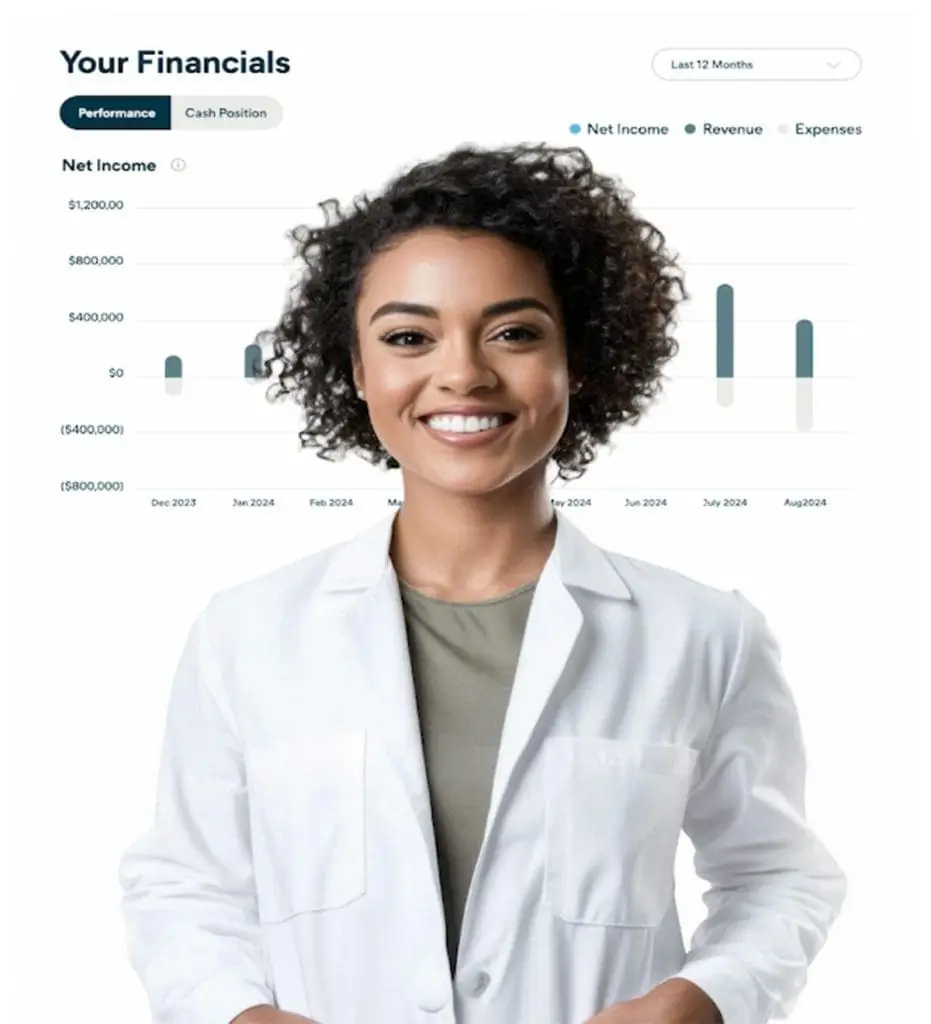
How This Shows Up In Your Financials
One reason these costs go unnoticed is how they are recorded.
Embedded invoice factoring fees often appear as:
- Platform fees
- Processing fees
- Financing charges
Without reviewing cash-flow trends and margins closely, business owners underestimate how much revenue is being lost to accelerated payments.
What Business Owners Should Review Before Accepting
Before clicking “get paid now,” it’s important to understand:
- How fees increase over time
- Whether there is a cap on total cost
- Who absorbs customer non-payment
- How disputes affect fees
- How charges appear in financial reports
If those details are unclear, the risk is higher than it appears.
Speed Is Valuable. Clarity Protects Margins.
Unless your margins are extremely high, this is not a good solution!
Embedded invoice factoring is becoming standard across modern business software. In specific situations, it can provide short-term flexibility.
The key is understanding the full cost, not just the convenience.
Clear terms, accurate bookkeeping, and visibility into cash flow allow business owners to decide when faster access to cash makes sense and when it quietly erodes profitability.
Other Options For Short-Term, Reasonable Loans
- Business line of credit: This flexible option works like a credit card but for your business. You only pay interest on what you draw out, and interest rates are reasonable.
- SBA 79a) Express loans: These are government-backed and are faster than getting a standard SBA loan.
- Credit Union Small Business Loans: Offer lower interest rates compared to traditional banks and might be more willing to work with small businesses on shorter-term loans.
Action Steps
- Plan ahead for cash flow needs. Build a forward-looking cash flow plan so short-term gaps do not force reactive decisions. A business line of credit in place before it is needed provides flexibility without pressure.
- Know the peaks and valleys of your cash flow cycle. Track when cash consistently tightens and when it strengthens. Keeping adequate funds in the bank during strong months helps cover slower periods and reduces reliance on invoice factoring to stay liquid.
- Maintain accurate, up-to-date financials. Reliable bookkeeping gives you clear visibility into cash inflows, outflows, and timing. When your financials are current and accurate, you can forecast cash needs with confidence, identify gaps early, and make proactive decisions that reduce dependence on short-term solutions like invoice factoring.