












FREE Review of Your Books Learn More ›
gross profit form

The Profit and Loss Statement as a Planning Tool

Bookkeeping xendoo Team
Share this article

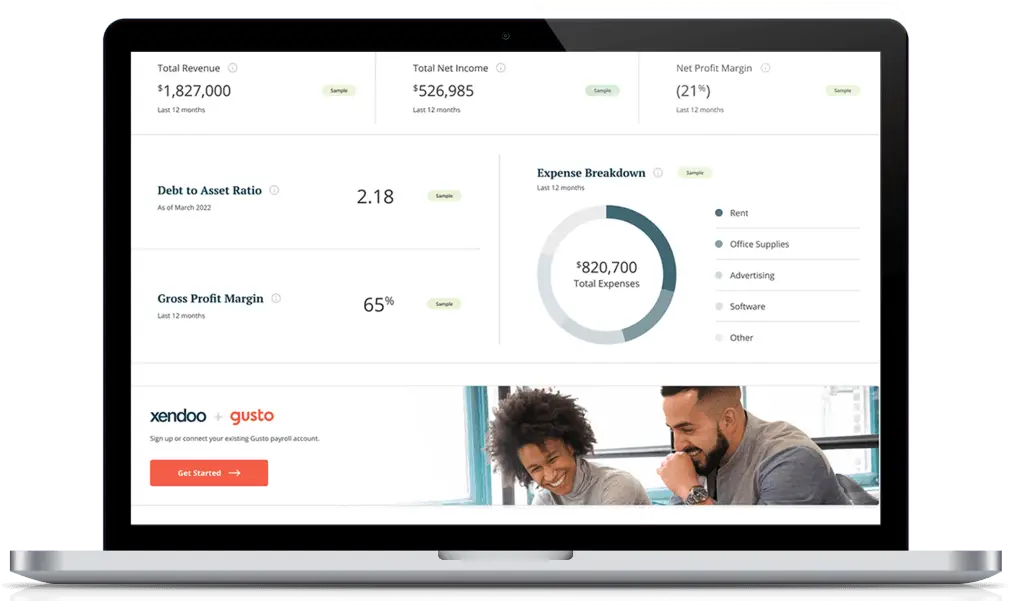
The monthly P&L statement you receive from xendoo is a great snapshot of how your business has performed in the recent past. But did you know that it can also help you strategize for future success?

Its numbers can guide you to answers for frequently asked questions like these:

Am I Meeting My Profit Margin?

If your Net Income is very small (or worse, a loss) and there are no external influences such as a normal seasonal dip in sales, your profit margin is too low. To figure your profit margin, use this formula:


Gross Profit ÷ Total Revenue = Profit Margin (usually expressed as a percent)

Example: $25,000 Gross Profit ÷ $100,000 Total Revenue = 0.25 Profit Margin (25%)


Is that percentage the one you determined when you set up your business plan? If not, look for areas that may need improvement in both the Revenue and Cost of Sales sections of your profit & loss statement. Consider raising prices, trimming expenses, or doing some of each.

Do I Have Money to Reinvest in the Business?

Look at the “bottom line” — your Net Income. This is how much you have left of your total sales after you pay both direct and indirect costs of operating the business. You should keep some cash available as a cushion against unexpected setbacks, such as an interruption in cash flow. If the net income is more than that, you can think about ways to use it to grow your business, such as buying new equipment.

Can I Afford to Expand?

Unlike the previous question, this one is about increasing your ongoing operating expenses — hiring additional employees, moving to a larger space (with higher rent), and so on. To make this decision:

1. Plug the increased numbers into the relevant lines in your in Other Income and Expense section on the P&L statement (i.e. Payroll).

2. Add up the section to get a new Total Other Income and Expense.

3. Calculate Gross Profit – Total Other Income and Expense = your new projected Net Income.

Now you can easily see whether the business can tolerate higher operating costs. We suggest that you use year-to-date figures rather than the results for the previous month. They are a more reliable indicator of how your business is likely to be performing in the future.

Should I Get a Business Loan?

Here again, the costs of paying back the loan will be reflected in the Other Income and Expense section of the profit and loss statement. Use the same steps in the paragraph above to decide whether this is a smart idea.

As a general rule, using a business loan to cover overhead expenses such as payroll is only digging yourself deeper into the hole. Go back to the first question for suggestions on how to improve profit margins so that you won’t need to seek loans.

Also, be aware that potential lenders will look at your P&L statements to judge whether you are a good risk. These financial professionals will be able to tell whether your business model is working and how efficient your operation is. Make sure you know those things yourself, so you can address any issues they might bring up with you.

Have more questions about the numbers on your profit and loss statement? Just ask your xendoo accounting professional. And remember, xendoo guarantees delivery of the statement by the 5th business day after the end of the month, so you can rest assured you’re acting on timely information


[av_sidebar widget_area=’Blog Post Disclaimer’ av_uid=’av-om2w’]

Related Articles

Timing Decisions in Business

Timing Decisions In Business That Quietly Shape Performance

Every business tracks revenue and expenses. Fewer track when those numbers move. Timing drives outcomes, cash flow, tax position, hiring pace, inventory levels, and loan readiness. Two businesses can post the same annual profit. One builds momentum. The other feels constant pressure. The difference comes down to the timing of decision-making in business throughout the…

Read More
Profit vs Cash

Why Profitable Businesses Still Run Out of Cash — Profit vs Cash Flow

Profit vs Cash Flow Profit shows performance.Cash determines survival. Many business owners review their P&L, see strong margins, and assume everything is on track. Then payroll hits. Vendors are due. Cash feels tight. This disconnect happens every day across growing businesses. Here is why—and how to fix it. Profit Does Not Equal Cash A profitable […]

Read More

Xendoo Expands AI Capabilities and Product Offering Through Botkeeper Acquisition

Xendoo exponentially scales its AI technology through the acquisition of Botkeeper’s Infinite engine, empowering the company to lead the charge in reshaping accounting through artificial intelligence. GREATER MIAMI, Fla., March 3, 2026 /PRNewswire-PRWeb/ — Xendoo, the tech-forward online bookkeeping and accounting firm, today announced its strategic acquisition of Botkeeper’s AI-powered bookkeeping automation platform, Infinite. The transaction significantly […]

Read More

How Organized Bookkeeping Simplifies Tax Season

Tax season highlights the quality of a business’s financial records. Every deduction, revenue figure, and tax calculation depends on the accuracy of the company’s books. When bookkeeping stays organized throughout the year, tax preparation becomes a structured process instead of a last-minute effort to track down missing information. Well-maintained books allow accountants to review financial […]

Read More

Why Accurate Bookkeeping Across Franchisees Is Critical for Franchisors

Franchise systems depend on financial consistency. Every franchisee operates under the same brand, pricing model, operational framework, and unit economics. However, without standardized and accurate bookkeeping across locations, franchisors lose visibility into system performance, unit economics, and financial benchmarks. Accurate bookkeeping at the franchisee level is not only an operational necessity. It directly affects financial […]

Read More

How to Get Your SaaS Books Investor-Ready

SaaS businesses operate in one of the most capital-driven growth environments in modern business. Whether pursuing venture capital, private equity investment, acquisition, or debt financing, financial clarity determines how investors evaluate risk, growth potential, and long-term scalability. Strong SaaS financials do more than document revenue and expenses. Investor-ready books demonstrate predictable revenue streams, scalable operating […]

Read More

Why SaaS Businesses Are Switching to Remote Bookkeeping

For many SaaS businesses, bookkeeping starts as an internal task. A founder handles it. An ops lead owns it part-time. Eventually, a junior hire takes it on. That approach works until the business scales. As subscriptions grow, transactions multiply, and revenue models become more complex, bookkeeping stops being a background task and starts influencing real […]

Read More

Is Catch-Up Bookkeeping Necessary For Small Businesses in 2026?

Bookkeeping usually falls behind in small, quiet ways. A month is skipped. Reconciliations stop. Transactions pile up in uncategorized accounts. Reports still exist, but they stop being reviewed because they no longer feel dependable. At the start of 2026, catch-up bookkeeping matters because it restores accuracy. That accuracy directly affects financing, cash flow, and tax […]

Read More
Free Consult