












Why Deferred Revenue Is Not Profit (and Why Founders Misread It)
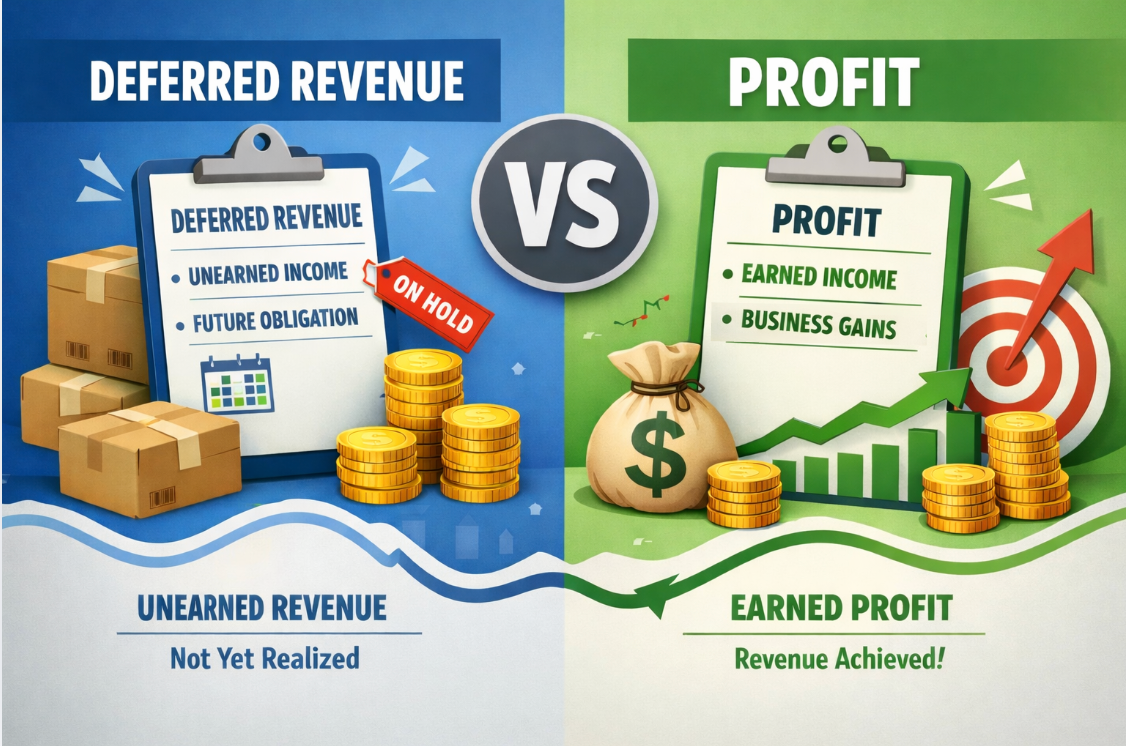
Deferred revenue is one of the most misunderstood numbers on a growing company’s financial statements.
It looks like cash. It feels like revenue. It shows up after a strong sales push.
But it is not profit.
For SaaS founders, subscription businesses, agencies with retainers, and any company that collects payment before delivering services, misunderstanding deferred revenue distorts decision-making. It affects hiring, spending, runway planning, and investor conversations.
This page explains what deferred revenue is, why founders misread it, and how to interpret it correctly.
What Is Deferred Revenue?
Deferred revenue (also called unearned revenue) is money collected before the product or service has been delivered.
Common examples:
- Annual SaaS contracts paid upfront
- Annual maintenance or support agreements
- Prepaid retainers
- Multi-month service contracts paid in advance
- Subscription boxes billed quarterly or annually
From an accounting standpoint:
- The cash is received.
- The revenue is not yet earned.
- The obligation to deliver still exists.
On the balance sheet, deferred revenue is recorded as a liability, not income.
Why Deferred Revenue Is a Liability
When a customer prepays, the business now owes:
- Time
- Access
- Services
- Product delivery
- Support
Until those obligations are fulfilled, the company carries a performance obligation.
Accounting standards require revenue to be recognized as it is earned, not when cash is received. This framework exists to reflect economic reality, not just bank balances.
For example:
If a SaaS company collects $24,000 for a 12-month contract in January:
- Cash increases by $24,000.
- Deferred revenue increases by $24,000.
- Each month, $2,000 is recognized as earned revenue.
At the end of Month 1:
- $2,000 becomes revenue.
- $22,000 remains deferred.
Only the portion delivered becomes income.
Why Founders Misread Deferred Revenue
1. It Feels Like Sales Momentum
When annual contracts close, bank balances grow quickly. Founders interpret the increase as proof of profitability.
But profit depends on:
- Cost structure
- Gross margin
- Operating expenses
- Timing of revenue recognition
Cash inflow does not equal earned income.
2. Bank Balance Bias
Early-stage founders often operate from the bank account.
If the balance rises, spending accelerates:
- Hiring earlier than planned
- Increasing marketing budgets
- Expanding tools or office space
But if obligations remain outstanding, that cash is not fully available for discretionary use. It funds delivery.
3. Mixing Cash Accounting with Accrual Reality
Subscription and SaaS businesses operate best under accrual accounting.
Under cash accounting:
- Revenue appears when cash hits.
Under accrual accounting:
- Revenue appears when earned.
If reporting is inconsistent or spreadsheet-based, founders see inflated revenue during heavy sales months and weaker revenue in delivery-heavy months. That distortion creates planning volatility.
Deferred Revenue vs. Profit: the Core Difference
Deferred revenue = obligation.
Profit = surplus after all earned revenue and expenses are accounted for.
A company can have:
- High deferred revenue
- Strong cash flow
- Negative net income
This often happens when:
- Customer acquisition costs are high
- Delivery costs are underestimated
- Support costs scale faster than expected
- Headcount grows ahead of earned revenue
Deferred revenue does not account for costs.
Profit does.
When Deferred Revenue Is a Positive Signal
Deferred revenue is not negative.
In fact, it can indicate:
- Strong upfront demand
- Customer commitment
- Predictable revenue streams
- Healthy annual contract adoption
The key is correct interpretation.
Deferred revenue reflects future performance obligations tied to existing customer commitments. It improves visibility. It does not measure earnings.
Common Founder Mistakes
Scaling Expenses Against Cash Instead of Earned Revenue
Spending ahead of recognized revenue compresses margins later.
Misreading Revenue Spikes
Large upfront deals create temporary revenue illusions under cash reporting.
Ignoring Revenue Recognition Policies
Inconsistent recognition creates misleading month-to-month comparisons.
Using Spreadsheets Too Long
Manual tracking increases timing errors and obscures true performance.
How to Interpret Deferred Revenue Correctly
- Separate cash flow from revenue.
- Monitor earned revenue monthly.
- Track gross margin on recognized revenue.
- Analyze burn relative to earned revenue, not just bank balance.
- Ensure consistent accrual-based reporting.
Financial dashboards should distinguish:
- Cash collected
- Revenue earned
- Deferred revenue balance
- Net income
Final Takeaway
Deferred revenue is not profit. It is a promise.
Founders who treat it as income often scale prematurely or misjudge financial health.
Founders who understand it use it strategically:
- To forecast accurately
- To hire responsibly
- To protect margins
- To communicate clearly with investors
Clarity around deferred revenue strengthens financial discipline and supports sustainable growth.
Lead with Clarity
Reclaim your time – focus on growth while we take care of the numbers.
- No Onboarding/Setup Fees
- Weekly Bookkeeping by 🇺🇸 team
- Data Driven Dashboard
- 24/7 Access via Xendoo App