













What Is Financial Literacy for Business Owners?
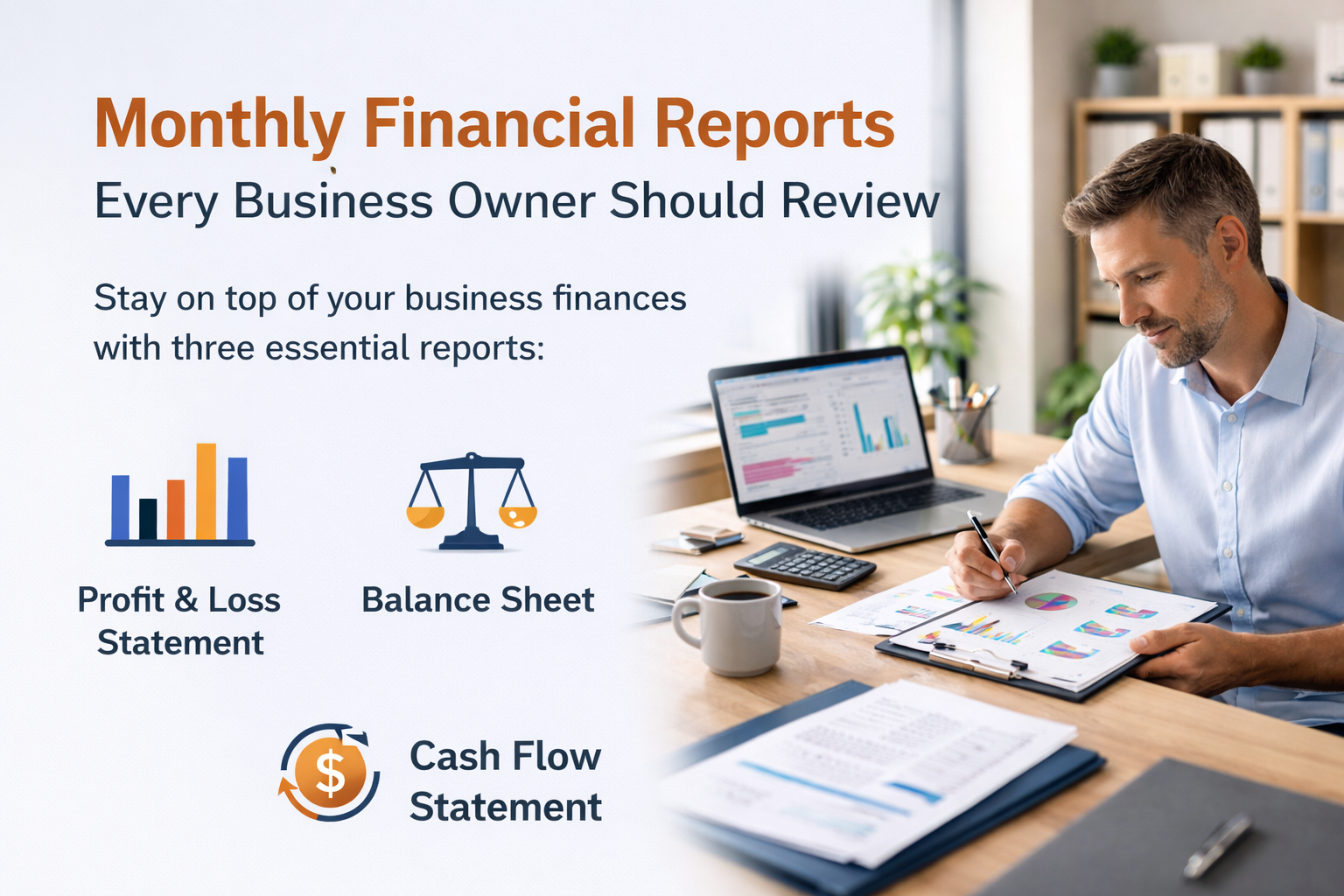
Financial literacy for business owners means understanding the numbers behind the business well enough to make strong decisions.
Clear financials create visibility across performance, cash, and growth.
Business owners with this visibility can:
- Evaluate profitability with accuracy
- Assess available cash before making commitments
- Align expenses with revenue
- Validate pricing against margin
- Prepare for upcoming tax obligations
- Make decisions grounded in data
With this level of understanding, financial reports shift from static documents to active tools used to lead and operate the business.
Why Financial Literacy Matters
Many business owners build strong companies around a product, service, or skill.
That is how businesses start.
Growth, though, requires more than delivering great work. It requires understanding what the numbers are saying each month.
Without financial literacy, it becomes harder to spot issues early.
Revenue can rise while margins shrink.
Profit can look healthy while cash feels tight.
Tax obligations can build quietly in the background.
Growth can create pressure instead of momentum.
Financial literacy helps business owners see those patterns sooner. It creates a clearer view of performance, stability, and opportunity.
What Financial Literacy Includes
Financial literacy for business owners usually centers on a few key areas.
Understanding the Profit and Loss Statement
The profit and loss statement shows performance over a period of time.
It helps business owners understand:
- revenue
- cost of goods sold or direct costs
- operating expenses
- gross profit
- net profit
This report shows whether the business is producing profit and where money is being spent.
A business owner with financial literacy knows how to review trends, spot expense spikes, and evaluate whether profitability is moving in the right direction.
Understanding the Balance Sheet
The balance sheet shows the financial position of the business at a specific point in time.
It includes:
- assets
- liabilities
- equity
This report helps business owners understand what the business owns, what it owes, and how much value it has built over time.
It also brings attention to items such as cash, debt, accounts receivable, accounts payable, and retained earnings.
Understanding Cash Flow
Cash flow shows how money moves in and out of the business.
This is one of the most important parts of financial literacy because a profitable business can still experience cash pressure.
Business owners need visibility into:
- operating cash flow
- timing of inflows and outflows
- spending patterns
- gaps between reported profit and actual cash available
This helps support better decisions around hiring, inventory, expansion, and tax planning.
Understanding Tax Obligations
Financial literacy also means understanding how taxes fit into the business throughout the year.
That includes knowing:
- how much to set aside
- when estimated payments are due
- how entity structure affects taxes
- how bookkeeping supports accurate filings
- how financial decisions may influence taxable income
Tax planning becomes stronger when the books are current and the numbers are clear.
Understanding Business Drivers
Financial literacy goes beyond reading reports.
It also means understanding what drives results.
That may include:
- revenue by service line or product category
- customer acquisition costs
- payroll as a percentage of revenue
- gross margin trends
- debt levels
- recurring fixed costs
- seasonality
Once a business owner understands the drivers behind performance, decisions become more strategic.
What Financial Literacy Looks Like in Practice
A financially literate business owner does not need to know every accounting rule.
They do know how to ask the right questions.
They review reports regularly.
They look at trends, not just single numbers.
They understand whether growth is translating into stronger margins and healthier cash flow.
They know when something looks off.
For example, if revenue is increasing but cash remains tight, they know to review receivables, inventory, debt payments, or spending patterns.
If profit is steady but taxes feel high, they know to review entity structure, deductions, and planning opportunities.
If margins are shrinking, they know to evaluate pricing, costs, and efficiency.
This kind of visibility improves decision-making across the business.
Common Gaps in Financial Literacy
Many business owners are highly capable operators and still have gaps in financial literacy.
That is common.
The most frequent gaps include:
- relying only on bank balance instead of financial reports
- reviewing revenue without reviewing margin
- focusing on profit without understanding cash flow
- waiting until tax season to think about taxes
- not knowing how to interpret balance sheet activity
- making decisions from incomplete or outdated books
These gaps do not mean a business is failing.
They usually mean the financial side of the business has not been translated into a form that supports leadership.
How Financial Literacy Strengthens a Business
When business owners understand their numbers, they are better positioned to:
- price with intention
- manage expenses
- protect margin
- prepare for taxes
- improve cash flow
- qualify for financing
- evaluate growth opportunities
- make faster, more confident decisions
This is where financial literacy becomes operational.
It supports hiring plans, equipment purchases, expansion, marketing investment, and long-term strategy.
It helps a business owner lead from facts.
How Xendoo Supports Financial Literacy
Financial literacy starts with accurate books.
Without clean records and timely reports, even experienced business owners are left making decisions without a full picture.
Xendoo helps create that clarity through:
- weekly reconciliations
- timely monthly financial reports
- organized, accurate bookkeeping
- visibility into business performance
- support for tax planning and filing
When financials are current, business owners have a stronger foundation for understanding the business and leading it with confidence
Final Thought
Financial literacy for business owners is the ability to understand what the numbers are saying and use that information to lead well.
It creates clarity.
It supports stronger decisions.
It helps turn financial reporting into something useful, practical, and actionable.
For a growing business, that kind of visibility makes a real difference.
Lead with Clarity
Reclaim your time – focus on growth while we take care of the numbers.
- No Onboarding/Setup Fees
- Weekly Bookkeeping by 🇺🇸 team
- Data Driven Dashboard
- 24/7 Access via Xendoo App