











About A2X for Shopify
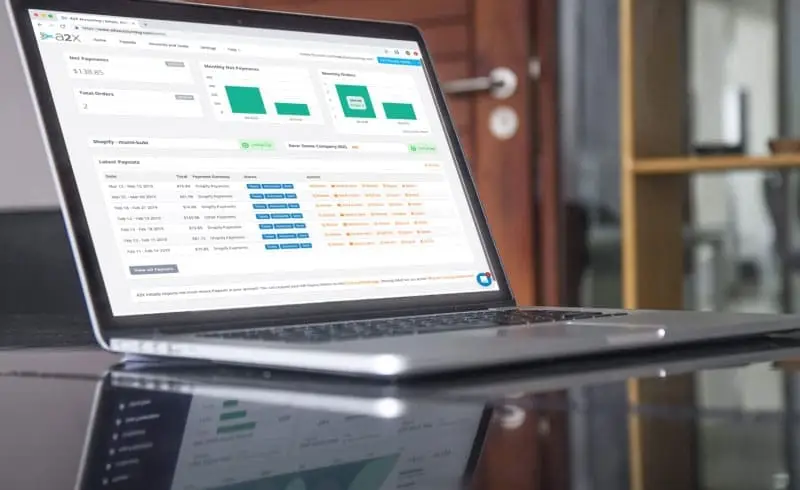
A2X for Shopify imports your Shopify payouts and sales and posts them to your accounting system in a way that makes it easy to reconcile the sales, refunds, discounts taxes and shipping against the cash receipts.
A2X for Shopify has several benefits for accounting:
- Reconciles Shopify Payments perfectly, including all fees
- Accurate Shopify data imported automatically
- Scales to support 1000’s of daily orders without sending 1000’s of individual invoices to the accounting system.
- Supports multiple Shopify stores connecting to a single accounting system for multi-channel sellers.
- Supports multi-currency sellers and multiple tax rates
Supported Payment Gateways
- Shopify Payments – payouts will reconcile directly to bank deposits
- PayPal – transactions posted to the accounting system with a clearing account
- Amazon Pay – transactions posted to the accounting system with a clearing account
- Authorize – transactions posted to the accounting system with a clearing account
- Afterpay – transactions posted to the accounting system with a clearing account
- Other gateways – posted to an accounting system with a clearing account, please contact support for specific gateway information.
Creating an A2X for Shopify account
Create a new A2X for Shopify account from the Shopify sign-up page.
If you already have an existing A2X for Amazon account, you will be asked to confirm you wish to create a new account.
Once your account is created it should look like this:
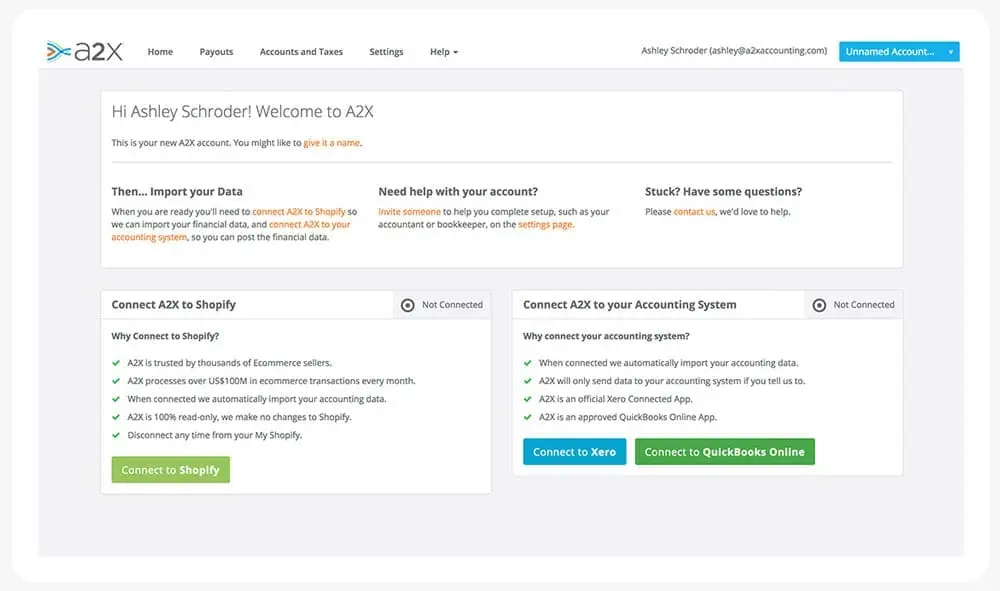
Now you are ready to set up your new A2X for Shopify account.
Connecting an A2X for Shopify account to your Shopify store
Click the green ‘Connect to Shopify’ button and input your Shopify shop in the form below and click ‘Connect’:
You will be redirected to your Shopify store and asked to log in and grant A2X permission to connect to your Shopify store. You must grant this permission in order to use A2X for Shopify.
Once the permission is granted you’ll be redirected back to A2X and your first payouts will begin to import into A2X – this process usually takes 10-20 minutes to begin populating in your account and for larger Shopify stores can take several hours to complete.
Once imported you should see the payouts like this:
Note: If you are not seeing any payouts after an hour, please check that your Shopify store uses the Shopify Payments gateway – if not you will need to enable the other payment gateways on the Settings > Connections page first.
Connecting to your accounting system
Click the Connect button for your accounting system and proceed with the connection process. You will be redirected to your accounting system to grant A2X permission.
If you are connecting A2X for Shopify to the same accounting system that you are already connected to with a different A2X account (either with Amazon or a different Shopify store), you should choose to use the existing connection, rather than create a new connection.
Configure the accounts and taxes for your Shopify sales
You need to configure A2X for Shopify to map your Shopify transactions into your accounting system.
A2X will offer to create several generic default accounts, or you can select your own individual mappings. We recommend working with your accountant on this initial setup as it will impact how the Shopify transactions appear in your financial reporting.
You can also customize how the A2X transactions are created, such as grouping the sales by country or province in the Settings > Invoice settings section of A2X. This can help if you have specific tax handling requirements for some countries.
Shopify Payments Gateway
The sales, refunds, and other transactions that are paid via Shopify Payments will be imported to A2X in their own payouts, these will be posted as a single batch of transactions and will always match perfectly to the corresponding deposits from Shopify.
Other Payment Gateways
If you use other gateways or payment methods on your Shopify store, these will be imported separately into A2X for Shopify. Typically you will need to define a clearing account for each one and post the corresponding payment proceeds to the same clearing account. The exact configuration for these accounts will differ depending on the payment methods.
You can enable, configure, and preview these settlements in Settings > Connections.
For more information about these mappings or if you have specific requirements that are not handled by the current mapping, please contact the A2X support team.
Post your Shopify payouts and reconcile them in your accounting system
Once you have connected and configured your account, you can send your payouts to your accounting system. To do that, click the Send link.
You will see the payout in your accounting system and be able to match or reconcile it to the corresponding deposit. For example here is Xero’s bank reconciliation screen showing the matching payouts.
[av_sidebar widget_area=’Blog Post Disclaimer’ av_uid=’av-om2w’]