






The process of 3-way matching in accounts payable protects your business against incorrect or fraudulent invoices. It mitigates risks in your company’s spending by making sure you don’t overpay for services or fall for counterfeit invoices.
It may sound like no one would fall for invoice fraud—when a scammer pretends to be a business partner or vendor and sends a company an invoice for services that they didn’t actually deliver. Usually, it is sent through a business email that might appear legitimate and requests that the recipient send payment through a wire transfer.
However, invoice fraud happens more often than you’d think and to some huge companies. A few years ago, Google and Facebook both fell for a fake invoice and paid over $123 million to a Lithuanian scammer. Now, tech giants can afford to go after the scammers in an attempt to recover their funds, which Google and Facebook did. But, most small businesses can’t do that and can face devastating losses when they lose funds to tricks like these.
One way that you can protect your business from fraudulent or incorrect invoices is by 3-way matching in accounts payable. In this guide, you’ll find everything you need to know about 3-way matching and how to use it.
What is 3-Way Matching?
Three-way matching is the process of verifying an invoice is legitimate and the amount is accurate by looking at three documents.
- Purchase order (PO)
- Receiving report
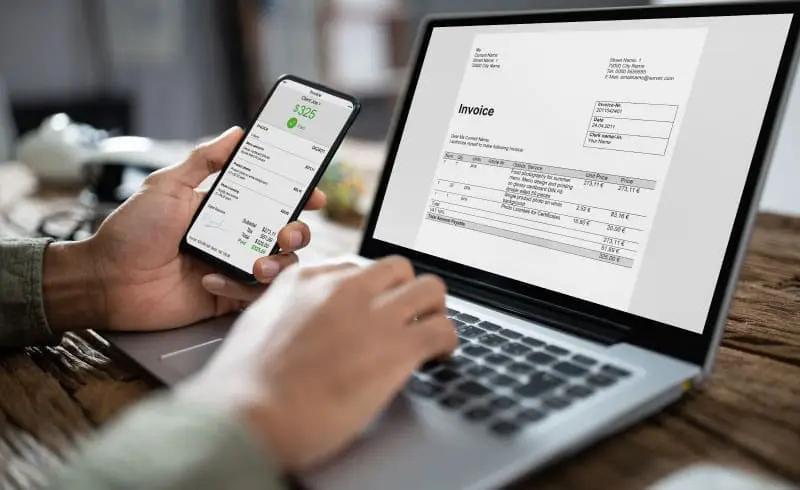
- Supplier’s invoice
We’ll go into each of these in detail later, but all three documents are needed to do a 3-way match.
A 3-way match verifies invoices by comparing documents to prove your business:
- Requested products or services in the invoice and it is legitimate
- Received the types and quantities of goods that the supplier agreed to in the invoice
You implement 3-way matching in accounts payable before issuing payment. Although 3-way matching primarily focuses on eliminating fraudulent invoices, it can also save you money by revealing an unintentional human error in a supplier’s invoice.
It can tell you the correct amount and type of products you ordered from a supplier and ensure you only pay for what you received.
Three-way matching is also part of the procurement process—getting, or procuring, goods and services for your business.
What is the Difference Between 2-Way, 3-Way, and 4-Way Matching?
While 3-way matching is the most popular method, it’s not the only way to compare invoices with other related documents. Other methods include 2-way and 4-way matching. Let’s identify how they differ.
2-Way Matching
If you use 2-way matching, you’re only comparing two documents—the purchase order and the supplier’s invoice. This method may be less time-intensive than 3-way and 4-way matching, but it leaves room for costly errors.
Suppose your business needs 150 products and sends a purchase order to supplier X for the required quantity. However, the supplier mistakenly delivers 145 products and sends an invoice to your business for 150 products.
Since 2-way matching only compares your purchase order and the supplier’s invoice, you will overpay the supplier for 150 products when you received 145.
Because 3-way matching uses a receiving report, you only pay for what you agreed to. In the above example, you’d only pay for what you received—145 products.
4-Way Matching
The process of 4-way matching in accounts payable compares four documents.
- Purchase order
- Supplier’s invoice
- Receiving report
- Inspection information
The inspection information is a report that the company uses to determine whether or not to pay for goods after an inspection. It may have a particular product quantity—above or below what it ordered from a supplier—that it can accept.
Many companies don’t need 4-way matching because the fourth verification step (inspection report) is nearly always unnecessary to establish an invoice’s legitimacy and accuracy. However, some enterprises may choose a 4-way match to manage frequent and large purchases.
How Does 3-Way Matching Work?
The 3-way match system tells you if the supplier invoices you’re paying are accurate — either accidentally or on purpose. How does it work?
First, you need the three documents mentioned above. Then follow the steps below to verify invoices before issuing payment.
1. Purchase Order
You’ll first look at the purchase order for verification. As a best practice, your business should not buy anything without a purchase order prepared in advance and entered into your accounting records.
Once counter-signed by the supplier, the purchase order is a legally binding document. It should specify:
- Names and quantities of items to be bought
- Price of items
- Delivery date
2. Receiving Report
Once you have a purchase order, you’ll create a receiving report. To create this, you’ll check all the supplies you received and add them to your inventory. Look at the quantity and types of items to make sure it matches the purchase order.
The report should then be entered into your accounting software. If you have an accountant or accounts payable staff, they can do this for you.
A typical receiving report includes:
- Date and time of delivery
- Purchase order number
- Name of vendor and/or shipping company
- Description of each item received
- Quantity of each item received
- Condition of items received (necessary for returning damaged goods)
3. Supplier Invoice
The bill sent by the vendor should match both the purchase order and receiving a report in item names, quantities, and prices. It is the responsibility of accounts payable to make sure these three documents match — and if they don’t, find out why not.
Discrepancies may be resolved by having the supplier issue a revised invoice, or in some cases a credit memo.
PO vs. Non-PO Invoices
When implementing 3-way matching in accounts payable, you should only use (PO) invoices. Non-PO invoices are unsuitable for a few reasons.
PO invoices have a purchase order attached to them. They have all the details in a purchase order as well as an order number.
On the other hand, a non-PO invoice is when a company buys something without a purchase order. It is also called an expense invoice because it usually refers to expenses incurred. Examples of non-PO invoices are:
- Employee travel or meal reimbursement
- Mileage reimbursement
Example of 3-Way Matching
To illustrate how a 3-way match works, here’s an example.
Caffeinated, a coffee shop chain, wants to order 500 products priced at $6 each from supplier Y. The coffee shop sends a purchasing order (PO) to supplier Y. In this case, the total product cost will be $3,000.
Once the supplier delivers the order, Caffeinated’s receiving staff checks and records the inventory to verify whether the delivery matches the purchasing order.
One week after delivering the orders to Caffeinated, supplier Y sends an invoice for the delivered products.
The accounts payable team cross-references three documents—purchasing order, the receiving report, and the supplier’s invoice. The team compares product quantity, cost per unit, and total costs in the three documents.
Should there be any discrepancies, the 3-way matching process will find them. For instance, if the supplier’s invoice mistakenly indicated that 550 were delivered, yet only 500 were, Caffeinated wouldn’t pay for the mistake. The receiving report will show the right product quantity and that is what you’ll pay.
Benefits and Drawbacks of 3-Way Matching
The benefits of 3-way matching are obvious: the prevention of human error or fraud which could result in financial losses for your business.
On the drawback side, the process can be time-consuming for accounts payable.
This could lead to delays in payment, resulting in late fees and disqualification for early payment discounts. Consider these accounting tips to make it more efficient:
- Use software that automates purchase orders and receiving reports, and integrates them with your accounts payable
- Don’t require a 3-way match for recurring or small-dollar invoices
- Allow accounts payable staff to approve invoices if the amounts on the purchase order and the invoice are within a few percentage points of matching
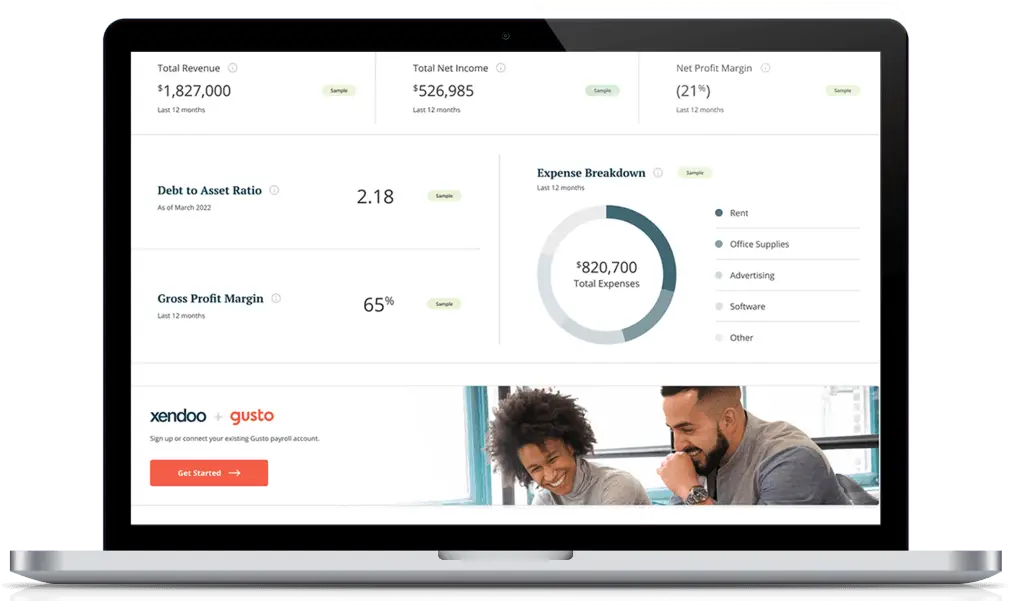
Some of these solutions may be beyond the budget of most small businesses, but not when you use xendoo.
Our accounting software gives you enterprise-level capabilities at an affordable monthly fee. It’s just one of the ways we relieve ecommerce and small business owners from the work and worries of bookkeeping and free their minds to focus on doing what they love. Get a free trial today or talk with a xendoo accountant.
[av_sidebar widget_area=’Blog Post Disclaimer’ av_uid=’av-om2w’]